The plants you can plant in the fall here on California’s Central Coast are the ones built for our weather: cool-season vegetables like lettuce and carrots, hardy perennials like salvia and yarrow, and California natives such as ceanothus and manzanita that use the winter rains to put down roots before summer ever shows up. We put this list together from what we’re planting and selling at the nursery right now, in Cambria, this fall.
What Can You Plant in Cambria Right Now?
Fall is the quiet season for gardening on this part of the coast. The days are cooler, the soil holds moisture longer, and the pests that chew through a summer garden have mostly thinned out. That combination makes this the easiest stretch of the year to get new plants established.
Start with the vegetables that prefer cold soil over warm. Leafy greens like lettuce, spinach, and arugula grow fast and can be cut again and again through winter. Brassicas, broccoli, cauliflower, and cabbage, keep growing steadily even as the days shorten. Root vegetables, carrots, beets, and radishes, go straight into the ground now and often come out sweeter for the cold. Garlic and shallots planted this month will sit quietly through winter and be ready to harvest next summer.
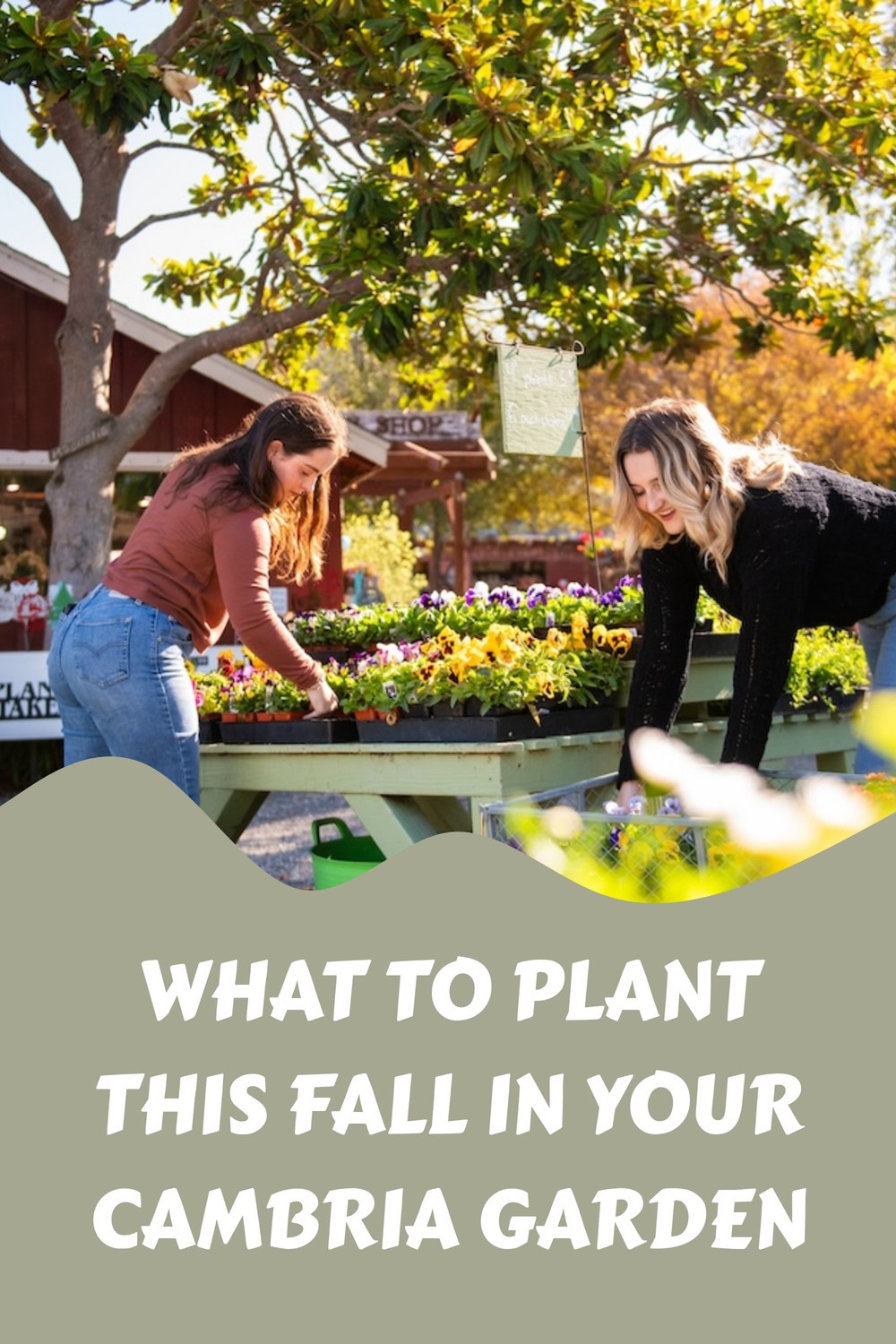
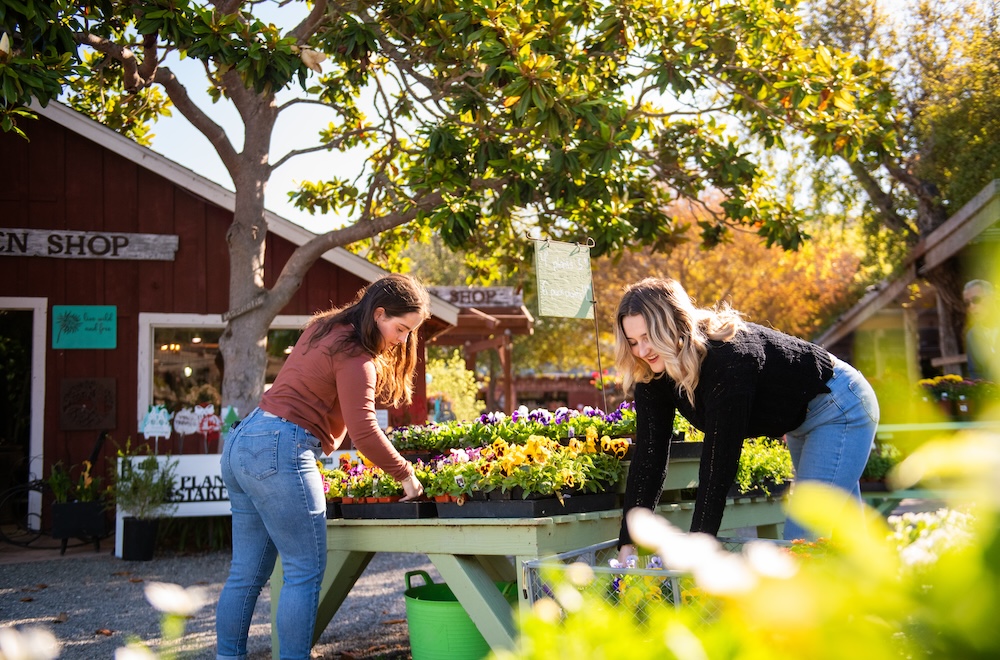
On the flower side, this is mum season, and we carry them in deep jewel tones for containers and beds. Pansies and violas will bloom straight through the cooler months when almost nothing else will. Coneflower and black-eyed Susan are perennials, and they carry a garden from fall into spring without much fuss. Ornamental kale and cabbage round things out for anyone who wants color without waiting for blooms.
We keep a rotating selection of all of this on the nursery floor, with fresh stock coming in regularly through the season. Our full breakdown of this fall’s plant list, including care notes by category, lives on our fall planting guide, and our team at the nursery can walk you through what’s doing well this week if you’d rather ask in person.
Which Plants Thrive in This Coastal Climate?
Not every “fall planting list” you’ll find online was written with a fog belt in mind, and that matters more here than almost anywhere else in California. Cambria sits right on the coast, and that changes what grows well and what sulks no matter how well you water it.
Drought-tolerant Mediterranean plants do well here because our summers are dry even when they’re not hot. Lavender, rosemary, thyme, and sage all hold up through the dry months and don’t mind the cooler nights fall brings. Succulents and cacti, agave, aloe vera, and echeveria among them, handle the sandy soil many Cambria yards sit on without complaint.
California natives are the other obvious fit, and they’re worth planting specifically in fall so winter rain does the watering for you. Ceanothus and manzanita are both workhorses for this coastline, and yarrow and California poppy fill in as reliable color. These plants evolved with our fog and wind rather than in spite of them, which is part of why the county’s own water-conservation program lists so many of them as approved low-water landscaping choices, alongside lavender and salvia, in its Cash for Grass plant list.
If you’re searching for California coastal region plants more broadly, our team put together a deeper guide to gardening on the Central Coast, covering soil, wind, and fog in more detail than we can fit into one post. You can find it on our Central Coast gardening guide.
What Should You Skip Planting in the Fall Here?
This is the part people moving here from inland California get wrong most often. Our cool, foggy summers mean heat-loving plants like citrus, hibiscus, and gardenia struggle to fruit or flower reliably, even in a good spot, simply because they never get the sustained heat they need. Coastal climate guides describe this same pattern in other fog-belt pockets along the California coast, and it holds true here too, as the broader coastal fog-belt zone profile lays out.
Wind is the other thing to plan around. Coastal gusts stress plants, especially through a dry summer, so containers and young plantings do better tucked against a wall or fence than out in the open. Salt spray off the ocean can also burn tender leaves, which is one more reason the drought-tolerant and native options above tend to outperform anything delicate.
How Do You Prep Beds and Care for Fall Plantings on the Coast?
Good fall planting starts with the soil, not the plant. Much of Cambria sits on sandy ground, with pockets of heavier clay elsewhere, and both benefit from compost worked in before you plant. Raised beds help if your yard leans toward clay, since they drain faster and warm a little quicker on the rare sunny day.
Once plants are in, a few inches of organic mulch does three jobs at once. It slows evaporation so the soil stays evenly moist, it keeps weed seeds from reaching enough light to sprout, and it insulates roots against whatever temperature swings fall brings. The UC Master Gardener Program’s mulch guide walks through the same three benefits in more depth if you want the full explanation.
Frost is less of a worry here than it is a few miles inland, and that’s one more reason fall planting works so well on this stretch of coast. According to the UC Master Gardeners of San Luis Obispo County’s cool season vegetable guide, the average first frost along the coast and in SLO proper doesn’t arrive until December 31, with the last frost typically gone by February 15. That’s a far longer frost-free runway than inland parts of the county get, and it’s part of why fall-planted perennials here get a full winter to establish before they’re ever asked to handle a cold snap.
Where Can You Find Fall Stock and a Few Extras While You’re Here?
Our shelves change with the season, so if you’re planning a planting weekend, it’s worth stopping by rather than guessing what we have from a list. We’re open daily, 9am to 5pm, at 2801 Eton Road, and our team can point you toward whatever’s doing best in the ground right now.
While you’re here, it’s worth a walk through the Farm Stand too. The produce changes with what’s ready, and right now that means apples, heirloom tomatoes, and the last of the season’s citrus, all grown by our sister property, 46 Ranch, down the road in Templeton. They also bring in pasture-raised eggs daily, so it’s an easy way to round out a trip that started with picking up plants. You can see what’s typically in stock on our Farm Stand page.
Fall is a forgiving season to garden in, and that’s the honest pitch here. Get something in the ground this month, whether it’s a tray of greens or a single ceanothus by the fence line, and let the cooler weather and the winter rain do most of the hard work for you.
Frequently Asked Questions
What’s the best time of year to plant in Cambria?
Fall is generally the strongest planting window on this part of the coast. Cooler air, moist soil, and fewer pests give new plants, especially perennials and California natives, time to settle in before summer heat or dry conditions arrive.
Will frost kill my fall plantings here?
It’s unlikely along the coast. Per UC Master Gardeners of San Luis Obispo County, the coastal and SLO area averages a first frost around December 31 and a last frost by February 15, a much shorter and later frost window than inland parts of the county see.
What California native plants handle the coastal fog and wind best?
Ceanothus and manzanita are two of the most dependable choices for this stretch of coast, with yarrow and California poppy filling in as lower-growing, reliable color. All four are suited to sandy soil and need little supplemental water once established.
Can I still grow vegetables for a fall harvest on the coast?
Yes. Leafy greens, root vegetables, and brassicas all do well planted now, and several, like carrots and beets, tend to taste sweeter after cooler soil temperatures set in.
Why do heat-loving plants like citrus struggle here even with good care?
Our cool, fog-influenced summers rarely deliver the sustained heat that citrus, hibiscus, and gardenia need to fruit or flower reliably, regardless of soil, sun exposure, or watering.